



The primary purpose of the monthly menstrual cycle is to prepare the body for a potential pregnancy. While every person’s cycle varies in length and intensity, the underlying biological process follows the same remarkable pattern.
During each cycle, an egg develops and is released from the ovaries, while the lining of the uterus builds up. If a pregnancy does not happen, the uterine lining sheds during a period, and the cycle begins all over again.
Here is a clear breakdown of the four distinct phases of the menstrual cycle and what to expect during each one.
1. The Menstrual Phase
This is the first stage of the menstrual cycle, commonly known as your period.
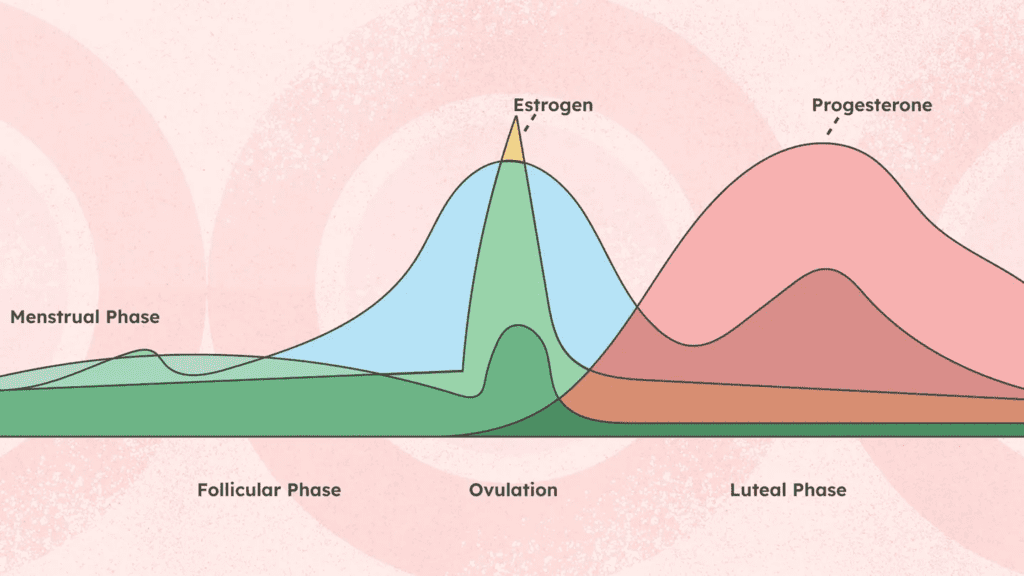
This phase begins when an egg from the previous cycle is not fertilized. Because pregnancy did not occur, your levels of the hormones estrogen and progesterone drop. The thickened lining of your uterus is no longer needed, so your body sheds it through your vagina as a combination of blood, mucus, and tissue.
You may experience several common symptoms during this phase:
- Abdominal cramps
- Tender breasts
- Bloating
- Mood swings and irritability
- Headaches
- Tiredness
- Low back pain
2. The Follicular Phase
The follicular phase technically starts on the first day of your period, meaning it overlaps with the menstrual phase. It ends the moment you ovulate.
During this time, your brain signals your pituitary gland to release follicle-stimulating hormone (FSH). This stimulates your ovaries to produce several small sacs called follicles, each containing an immature egg. Ultimately, only the healthiest egg will mature.
As the follicle matures, it sets off a surge in estrogen that thickens your uterine lining, creating a nutrient-rich environment for a potential embryo. This phase typically lasts about 16 days, though it can range from 11 to 27 days depending on your unique cycle.
3. The Ovulation Phase
Rising estrogen levels from the follicular phase trigger your brain to release luteinizing hormone (LH). This surge starts the process of ovulation.
Ovulation occurs when your ovary releases the mature egg. The egg then travels down the fallopian tube toward the uterus. This phase is your “fertile window”—the time during your cycle when you can get pregnant. Because sperm can live inside the body for up to 5 days, pregnancy can occur from sex had up to 5 days before ovulation.
Signs that you are ovulating include:
- A slight rise in basal body temperature
- Thicker vaginal discharge with the texture of raw egg whites
For a typical 28-day cycle, ovulation happens around day 14. The egg only survives for about 24 hours. If it is not fertilized in that window, it will dissolve.
4. The Luteal Phase
After the egg is released, the empty follicle transforms into a structure called the corpus luteum. This structure releases hormones, primarily progesterone, to keep your uterine lining thick and ready for a fertilized egg.
If you get pregnant, your body produces human chorionic gonadotropin (hCG)—the hormone detected by pregnancy tests—which maintains the thick uterine lining.
If you do not get pregnant, the corpus luteum shrinks and absorbs back into the body. The resulting drop in estrogen and progesterone causes your period to start. During this phase, you may experience premenstrual syndrome (PMS) symptoms, including:
- Bloating and weight gain
- Breast swelling or tenderness
- Mood changes
- Food cravings
- Trouble sleeping
Identifying Common Cycle Issues
Every menstrual cycle is different. Some are perfectly regular, while others fluctuate. Getting familiar with your normal baseline is the best way to identify potential issues. Tracking when your period starts and stops, the heaviness of your flow, and your daily symptoms can provide valuable insights.
Several factors and conditions can alter your menstrual cycle:
- Birth control: Hormonal pills or devices can make periods lighter, shorter, or stop them entirely.
- Pregnancy: A missed period is often the first sign of pregnancy.
- PCOS (Polycystic ovary syndrome): This hormonal imbalance prevents eggs from developing normally, causing irregular or missed periods.
- Uterine fibroids: Noncancerous growths in the uterus can cause heavy, prolonged bleeding.
- Eating disorders: Conditions like anorexia or bulimia can severely disrupt hormones and cause periods to stop.
When to see a healthcare professional:
- You have skipped periods entirely.
- Your periods are highly irregular.
- You bleed for more than 7 days.
- Your cycles are shorter than 21 days or longer than 35 days.
- You experience heavy bleeding between your periods.
Helpful Resources for Menstrual Health
- The American College of Obstetricians and Gynecologists (ACOG) – Menstruation FAQ
- Mayo Clinic – Menstrual Cycle: What’s Normal, What’s Not
- Office on Women’s Health – Menstrual Cycle Basics
Also Read : Are Blood Clots During Periods Normal? Causes & When to Worry