
Digital privacy is a major concern today. Following the overturn of Roe v. Wade, many people worry about how companies might use the personal data stored in period-tracking apps.
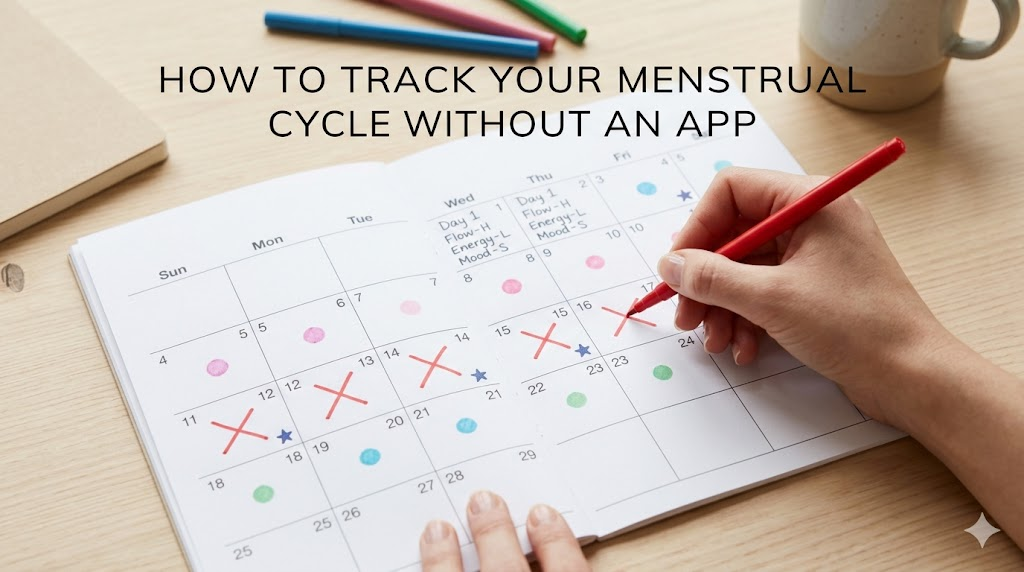
You do not need a smartphone to understand your body. You can easily and accurately track your menstrual cycle using an old-school paper calendar. Here is a straightforward guide to manual period tracking.
The Benefits of Tracking Your Cycle

Keeping a written record of your monthly cycle provides valuable insights into your overall reproductive health.
- Learn your baseline: You quickly discover what a “typical” period looks and feels like for your specific body.
- Predict the future: You can accurately estimate when your next period will arrive, making it easier to plan vacations or schedule health care appointments.
- Inform your doctor: Clinicians frequently ask for the first day of your last menstrual period. A written log gives you the exact answer.
- Spot health changes: Tracking helps you identify unusual symptoms immediately. You can quickly spot heavy bleeding, severe pain, or irregular spotting and discuss these changes with a healthcare provider.
How to Track Your Cycle on Paper
Grab a paper calendar, a notebook, and some colorful pens. Follow these simple steps to calculate your cycle:
- Gather your past data: If you previously used an app, write down the start and end dates of your last few periods.
- Find your period length: Count the number of days you actively bleed. Most periods last between 2 and 7 days. Identify your personal average.
- Calculate your cycle length: Count the days starting from the first day of your period up to the day before your next period begins. A typical menstrual cycle lasts between 26 and 32 days.
- Predict your next period: Start on the first day of your most recent period (Day 1). Count forward using your average cycle length. Mark the following day on your calendar—this is your predicted start date.
Important Note: Menstrual cycles naturally fluctuate. Physical stress, emotional stress, and routine changes can all shift your dates. Your paper calendar provides a strong estimate, not a perfect guarantee.
What Symptoms to Log
Your cycle involves much more than just bleeding. Keep a daily record of your physical and emotional symptoms to understand your complete hormonal timeline.
Make sure to log:
- The heaviness of your bleeding
- Physical symptoms like cramping, bloating, or fatigue
- Emotional changes and mood swings
- Changes in vaginal discharge
- Days you had sex
- Days you took emergency contraception
If you notice severe pain that disrupts your daily life or bleeding heavy enough to soak a pad every hour, schedule an appointment with your doctor right away.
Also Read : Understanding the 4 Stages of Your Menstrual Cycle