




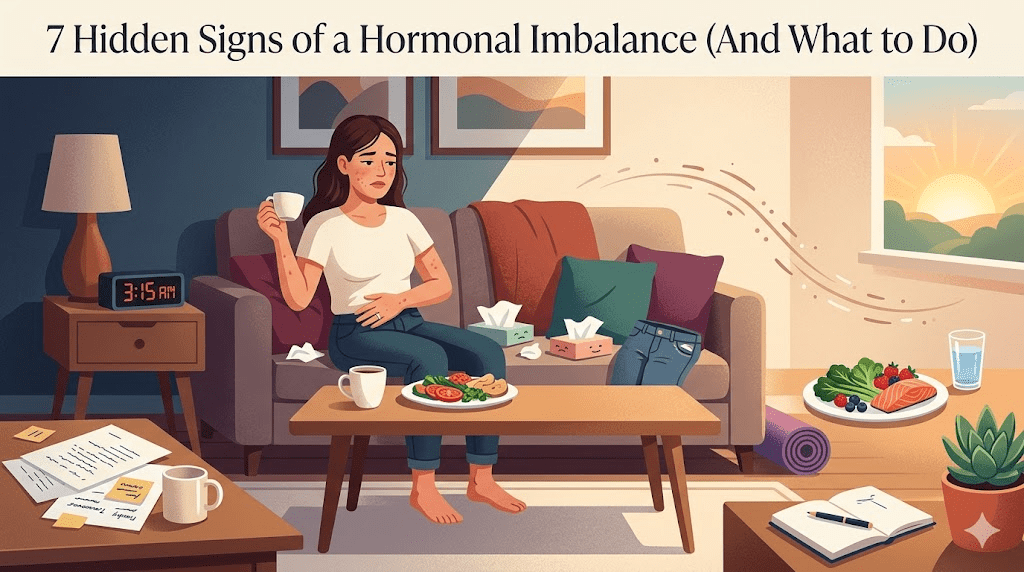
Hormones act exactly like your body’s internal orchestra. Even a slight disruption can throw your entire system off balance. For people assigned female at birth (AFAB), fluctuating hormones are completely natural. They occur routinely during puberty, pregnancy, and menopause.
However, an underlying hormonal imbalance can cause unexpected and frustrating disruptions to your daily routine. Here is what you need to know about spotting the signs and finding long-term relief.

What Causes Hormonal Imbalances?
Various factors can easily disrupt your body’s delicate chemical messengers. First, natural life transitions naturally shift your hormonal baseline over time. Additionally, medical conditions like Polycystic Ovary Syndrome (PCOS), thyroid disorders, and diabetes play a major role in regulating these chemicals. Furthermore, external factors such as chronic stress, eating disorders, or certain medications can quickly disturb your internal system.
7 Key Signs to Watch For
1. Unexpected Skin Problems Unexplained breakouts on your face, chest, or back often point directly to a hormonal shift. Consequently, sudden hyperpigmentation or dark patches on the neck can also signal changing estrogen levels. Getting to the root cause of these internal breakouts is absolutely essential for maintaining a clear, effective daily skincare routine.
2. Noticeable Hair Changes Your hormones directly dictate your hair’s natural growth cycle. Therefore, unexpected hair thinning or loss or sudden coarse hair growth on the chin are strong indicators of an internal imbalance. Dialing in your internal health is just as important as your external haircare regimen to keep your hair looking its best.
3. Menstrual Irregularities Monthly cycles naturally fluctuate from time to time. However, consistently absent, heavy, or unpredictable periods usually stem from shifting estrogen and progesterone levels.
4. Sudden Weight Shifts Unexplained weight gain or rapid weight loss always warrants a closer medical look. Specifically, conditions like PCOS or thyroid dysfunction frequently disrupt your metabolism and cause unexpected changes on the scale.
5. Mood Swings and Sleep Issues Estrogen drops directly impact your body’s serotonin production. As a result, you might experience heightened anxiety, severe irritability, or frustrating night sweats that completely disrupt your sleep schedule.
6. Digestive Distress Your gut health relies heavily on perfectly balanced sex hormones. Ultimately, sudden bouts of unexplained constipation or diarrhea might actually originate from your endocrine system rather than your diet.
7. Intimacy Disruptions Dropping hormone levels frequently cause a noticeably low libido. Moreover, physical symptoms like vaginal dryness or pain during intimacy are very common signs of an underlying imbalance.
What Should You Do Next?
Diagnosing an imbalance requires professional medical guidance from a trusted provider. Initially, you should schedule a comprehensive evaluation with your primary care physician. They will thoroughly review your health history and run specific lab tests. Afterward, your doctor might recommend an ultrasound or a pelvic exam to pinpoint the exact issue.
Treatment options vary widely based on your specific physical needs. Fortunately, doctors frequently prescribe targeted hormone therapy, anti-androgen medications, or specific birth control methods to restore harmony to your system. Always consult your medical provider before trying any over-the-counter remedies!
Also Read : Painful Periods vs. Endometriosis: How to Tell the Difference