




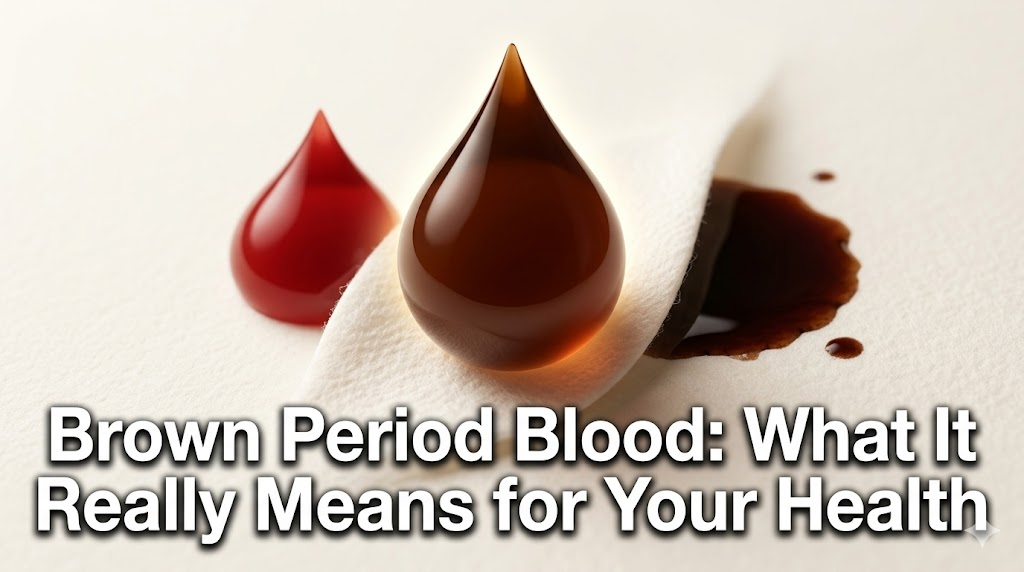
The color and consistency of your period blood can act as a window into your overall reproductive health. Let’s break down exactly what brown period blood means, why it happens, and when it might be time to check in with a doctor.
Yes, brown period blood is generally perfectly normal.
The brown color is primarily caused by a natural process called oxidation. When blood exits the uterus quickly (like during your heaviest flow days), it appears bright red. However, when the flow slows down, the blood takes longer to leave the body. During this extra time, the blood is exposed to oxygen, which turns it from bright red to a dark brown shade. Therefore, brown blood is simply “older” blood. You can learn more about what different period blood colors mean from the Cleveland Clinic.
While it is usually harmless, there are certain medical conditions—like yeast infections, sexually transmitted infections (STIs), and inflammatory conditions like cervicitis—that can cause brown discharge. Because of this, it is important to pay attention to any accompanying symptoms.
When Does Brown Blood Typically Occur?
Brown blood tends to show up at specific, predictable points in a woman’s cycle or life stage:
- The Beginning or End of Your Period: This is the most common time to see brown blood. The flow is moving slowly, allowing time for oxidation. Brown blood at the very start of your period might even be leftover blood from your previous cycle.
- Mid-Cycle Spotting: Some women experience brown spotting during ovulation (when an egg is released). This may be accompanied by low abdominal pain, changes in basal body temperature, and an egg-white-like discharge.
- Implantation Bleeding: For pregnant women, brown spotting can occur 10 to 14 days after conception when a fertilized egg attaches to the uterine lining. This is known as implantation bleeding.
- Postpartum (Lochia): After childbirth, women experience vaginal discharge known as lochia. It starts off bright red but usually transitions to a brown color around the fourth day as the bleeding slows.
- Perimenopause: As women approach menopause, fluctuating estrogen levels can cause irregular periods and variations in blood color and texture, making brown blood much more common during perimenopause.
- Polycystic Ovary Syndrome (PCOS): Women with PCOS may experience brown spotting between cycles. PCOS can prevent proper ovulation, causing the uterine lining to build up and shed irregularly.
Possible Health Implications of Brown Period Blood
While usually normal, brown period blood can sometimes signal an underlying health issue:
- Pregnancy Complications: While light brown spotting can be normal implantation bleeding, any bleeding during pregnancy should be evaluated by a doctor. In some cases, brown spotting can be a sign of a missed miscarriage (where the pregnancy stops developing, but tissue does not immediately pass) or an ectopic pregnancy.
- PCOS: If you consistently experience brown discharge between irregular periods, it may be a sign of Polycystic Ovary Syndrome, a hormonal imbalance that affects ovulation.
- Infections: STIs (like gonorrhea or chlamydia) and inflammatory conditions (like vaginitis) can cause brown spotting.
When to See a Doctor
You know your body best. If you notice a significant change from your normal period pattern, it is always worth discussing with a healthcare professional.
You should seek prompt medical advice if you experience brown period blood alongside any of the following symptoms:
- The brown discharge persists for several weeks without developing into a normal period.
- It is accompanied by abnormal symptoms like severe cramping, pelvic pain, itching, or a foul odor.
- Your period lasts longer than seven days, or the flow is unusually heavy.
- You experience bleeding between periods or after sexual intercourse.
- You experience any vaginal bleeding after menopause.
- You have lower abdominal pain, a fever, or unusual fatigue.
- You are pregnant and experience any spotting, particularly if accompanied by cramping or dizziness.
If you have brown discharge and also experience symptoms like heavy periods, anemia, pain during intercourse, frequent urination, or severe bloating, consult a doctor immediately, as these could be signs of uterine fibroids.
Conclusion
While brown period blood might look alarming at first glance, it is usually just older, oxidized blood making its way out of your body at the beginning or end of your menstrual cycle.
However, paying attention to your cycle is crucial. Tracking the color, consistency, and timing of your period blood provides valuable insights into your reproductive health. If you ever experience brown blood alongside pain, a foul odor, or highly irregular cycles, don’t hesitate to reach out to a gynecologist for a professional assessment.
Also Read : The Ultimate PCOS Diet Plan: Foods and Easy Recipes to Relieve Symptoms