

It is Tuesday, March 31, 2026, and while the “period positive” movement has made giant leaps in destigmatizing menstruation, the practical logistics of hygiene remain a daily science for millions. Whether you are using traditional cotton, modern ultra-thins, or the increasingly popular Oxo-Biodegradable napkins now being mandated in many public spaces, knowing when to swap your pad is the difference between a comfortable day and a clinical complication.
Menstrual hygiene in 2026 is no longer a “one-size-fits-all” recommendation. It is a calculated balance of your flow rate, the local climate, and the specific material science of your chosen product.
The Golden Window: The 4-to-8 Hour Rule
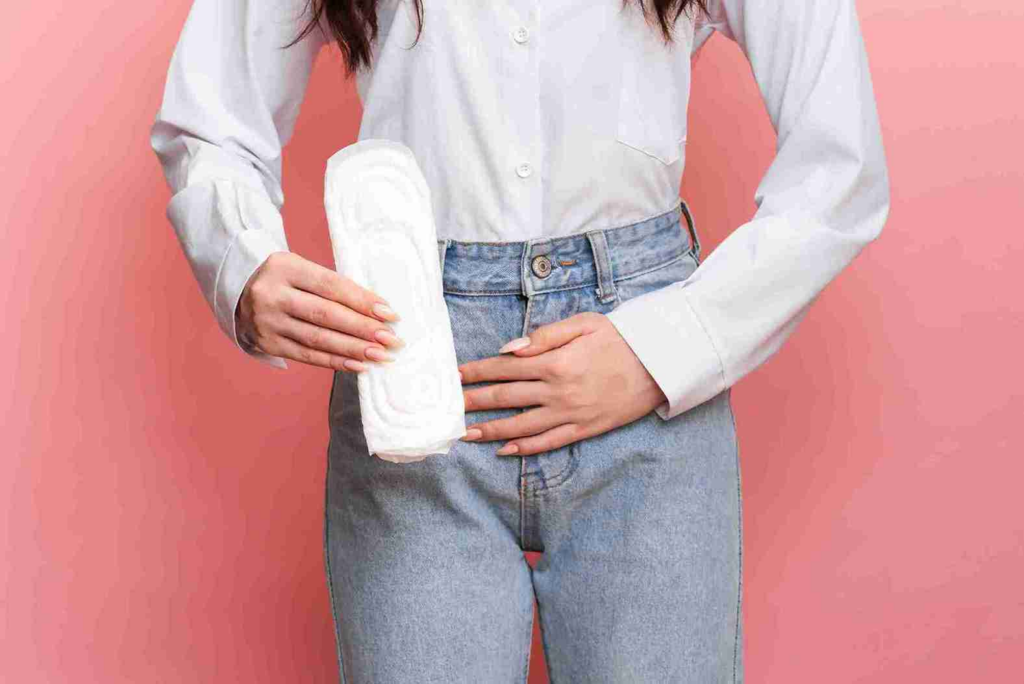
The American College of Obstetricians and Gynecologists (ACOG) has long maintained a general recommendation to change your pad every 4 to 8 hours. However, in 2026, experts often suggest a more proactive 3-to-4 hour window on heavy days to mitigate bacterial proliferation.
Bacterial growth ($B$) over time ($t$) in a moist, nutrient-rich environment can be modeled by an exponential growth equation:
$$B(t) = B_0 e^{rt}$$
Where $B_0$ is the initial bacterial count and $r$ is the growth rate. Because menstrual blood is a bio-fluid rich in proteins, the growth rate $r$ increases significantly in “tight quarters” where sweat and body heat are trapped. Changing the pad before it reaches its maximum absorption capacity prevents this buildup from reaching a threshold that causes odor or irritation.
Beyond the Flow: Environmental Variables
Your schedule and surroundings dictate your change frequency as much as your biology does. In 2026, we categorize these “frequency accelerators” as follows:
- The Exercise Variable: Physical activities like Pilates or spin classes cause pads to shift and “squish.” Sweat increases moisture, making a change immediately after a workout a medical necessity to avoid pad rash (contact dermatitis).
- The Humidity Factor: If you are in a tropical or hot climate, the trapped heat acts as an incubator. Proactive changes every 3 hours are recommended during peak summer months.
- The Travel Factor: Long flights or back-to-back meetings are “leak-risk” zones. In 2026, many frequent travelers opt for overnight pads during the day for the added security of wider backs and higher absorbency.
The Pad Hierarchy: From Liners to Overnights
Choosing the right tool for the job is the first step in successful hygiene management. By early 2026, new Global ISO Standards have begun to streamline how absorbency is labeled, helping you choose accurately:
| Pad Type | Ideal Usage | 2026 Innovation |
| Panty Liners | Spotting or backup. | Infused with pH-balancing layers. |
| Ultra-Thin | Light to medium flow. | High-density SAP (Super Absorbent Polymers) for zero bulk. |
| Maxi/Super | Heavy initial days. | Improved “stay-dry” top sheets to prevent chafing. |
| Overnight | 8+ hours of sleep. | Extra-wide wings and rear protection for 360-degree leak safety. |
| Biodegradable | Sensitive skin. | Made from bamboo or organic cotton; plastic-free. |
Risks of the “Extended Wear”
While you cannot get Toxic Shock Syndrome (TSS) from a pad (as it is an external product), wearing one for too long is not without risk.
- Infection Zones: Trapped moisture is a breeding ground for yeast infections and Bacterial Vaginosis (BV).
- The Pad Rash: Friction combined with dampness leads to stinging, itching, and skin discoloration.
- Modern Screening: Interestingly, a 2026 study in The BMJ suggests that menstrual blood collected on specialized “minipads” can now be used as a non-invasive screening tool for HPV, emphasizing the pad’s role as a diagnostic window.
Conclusion
In 2026, the “best” time to change your pad is before you feel you need to. By the time a pad feels wet or uncomfortable, it has already become a site for bacterial growth. Aim for a fresh one every 4 to 6 hours as a baseline, and don’t be afraid to utilize different absorbencies to match the “ebb and flow” of your cycle. As the Supreme Court of India recently noted, access to clean, timely hygiene is a fundamental right—make sure you exercise it for your own health.