
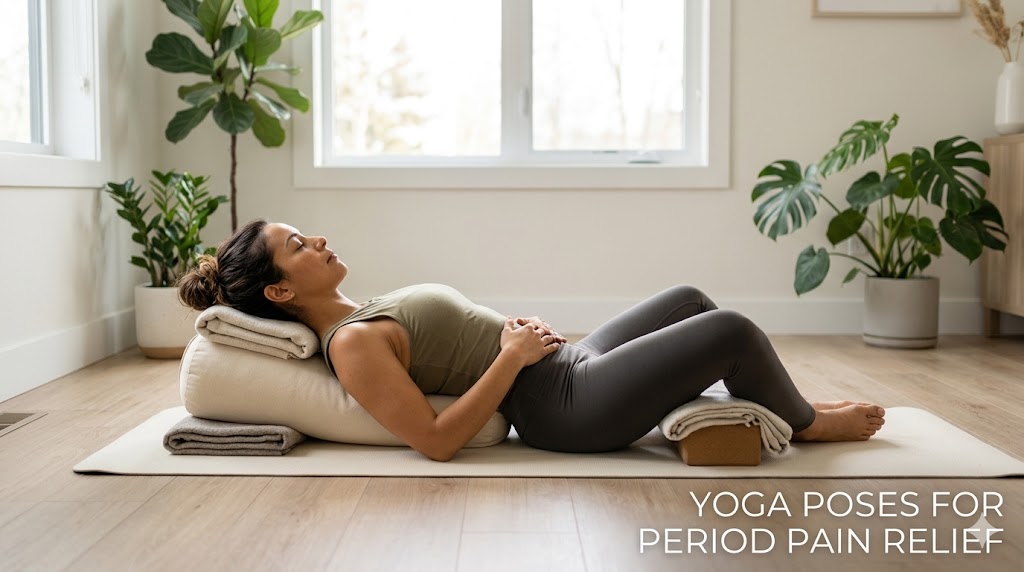
It’s late March 2026, and if you’re like Priya—our vibrant college student who used to miss classes and “curse the moon” every month—you’ve likely been told that period pain is just a “rite of passage” to be suffered in silence. Let’s be real: missing out on life because of Primary Dysmenorrhea is a 20th-century vibe we are officially over.
While many reach for a heating pad and stay perfectly still, the clinical secret of 2026 is intentional, gentle movement. As Priya discovered through her gynaecologist, your body isn’t just aching; it’s tensing up in a protective reflex that actually amplifies the pain. By integrating specific asanas, we can shift the body from a state of “threat” to “safety,” effectively hacking our own pain signaling.
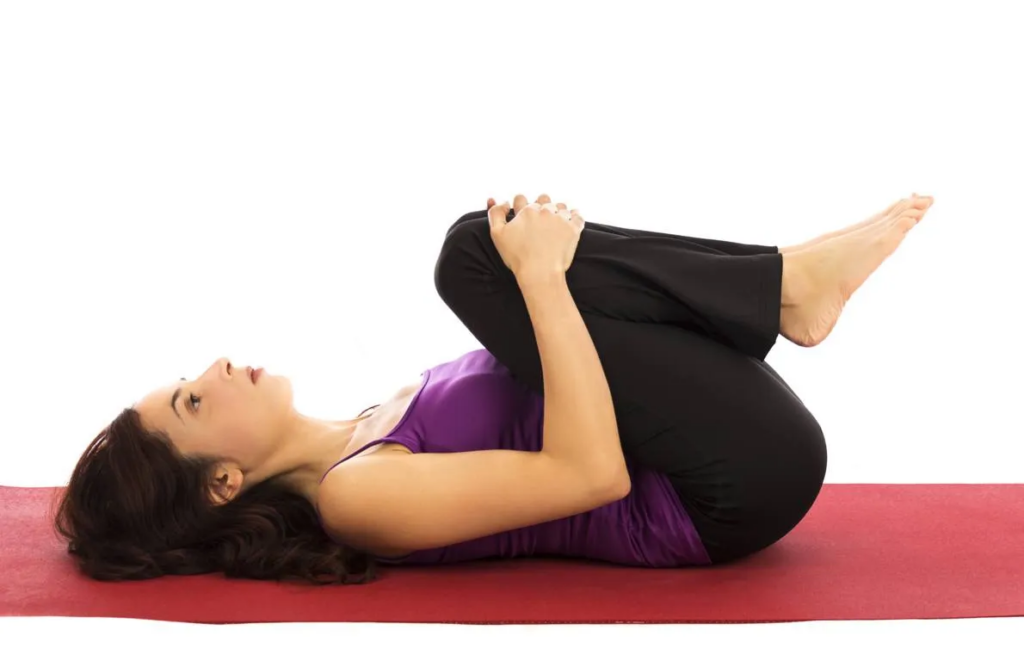
The Bio-Mechanical Shift: Why Yoga Works
Period pain is primarily driven by an overproduction of prostaglandins, which cause uterine contractions. When we are in pain, the sympathetic nervous system (“fight or flight”) takes the wheel, causing peripheral muscle tension.
Yoga acts as a “manual override” for the nervous system. By engaging the parasympathetic response, we lower the perception of pain. The relationship between relaxation and pain intensity can be modeled conceptually as:
$$Pain_{Perceived} \approx \frac{Prostaglandin\ Activity}{Vagal\ Tone + Oxygenation}$$
According to research found on NCBI regarding Yoga and Dysmenorrhea, regular practice of restorative poses improves pelvic blood flow and reduces the “ischemic” pain associated with heavy cramping.
The “Comfort Flow”: 5 Poses for Immediate Relief
These aren’t about “getting a workout”; they are about creating space. If you are hurting, focus on breathing into the lower abdomen as if you are “unwinding” a tight knot.
| Asana | Target Area | The 2026 “Priya” Perspective |
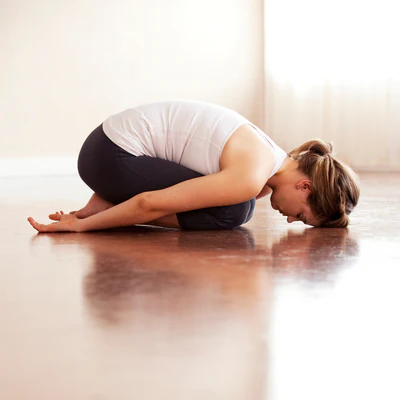
| Balasana (Child’s Pose) | Lower Back & Mind | Massages the abdomen and stretches the lumbar spine. |
| Cat-Cow (Bitilasana) | Spinal Fluidity | Moves the “stuck” energy and improves pelvic circulation. |
| Supine Spinal Twist | Hips & Obliques | Feels like “wringing out” deep-seated pelvic tension. |
| Reclined Bound Angle | Pelvic Floor | Opens the groin and encourages total release. |
| Savasana (Corpse Pose) | Central Nervous System | Reduces overall cortisol levels and pain perception. |
Pro-Tip: In Supta Baddha Konasana (Reclined Bound Angle), use pillows or rolled blankets under your knees. In 2026, we value “prop-supported” comfort over “stretching through the pain.” For more on prop usage, check the Yoga Journal guide to Restorative Poses.
Clinical Integration: NSAIDs & Mindfulness
Priya’s doctor didn’t just suggest yoga; she suggested a dual-track approach.
- Chemical Relief: Taking NSAIDs (Non-Steroidal Anti-Inflammatory Drugs) during the first 48 hours to block prostaglandin production at the source.
- Structural Relief: Using yoga to manage the secondary muscle tension.
As noted by the Mayo Clinic’s guide to Menstrual Cramps, combining medical intervention with lifestyle adjustments like yoga provides the most robust recovery. Celebrity trainer Gunjan Kamra emphasizes that this is a mindful journey—listening to your body’s limits is the ultimate form of self-care.
Conclusion
Yoga for period pain is an intelligent pathway built around your body’s natural mechanisms. In an era where we are finally breaking the silence around women’s health with campaigns like #StopThePeriodPain, understanding that “gentle is powerful” is a game-changer. Like Priya, you can regain control of your month. You aren’t just stretching; you are self-soothing, proving that healing doesn’t always have to be hard—it just has to be intentional.