
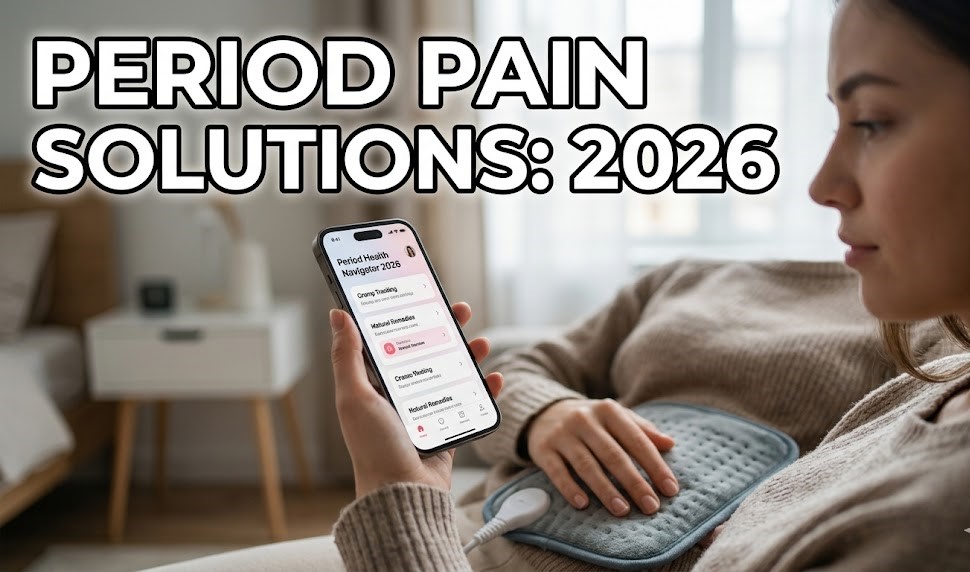
Let’s be real: period cramps are the uninvited guests that show up every month, raid the fridge, and demand you stay in bed. In 2026, despite all our technological leaps, the biological reality of dysmenorrhea (painful periods) remains a monthly hurdle for over half of those who menstruate.
The pain is usually caused by prostaglandins, hormone-like chemicals that make your uterus contract to shed its lining. While a little cramping is expected, you don’t have to just “tough it out.” Between modern OTC (over-the-counter) options and time-tested home remedies, there is a science to finding relief.
The OTC Arsenal: Top 5 Medications
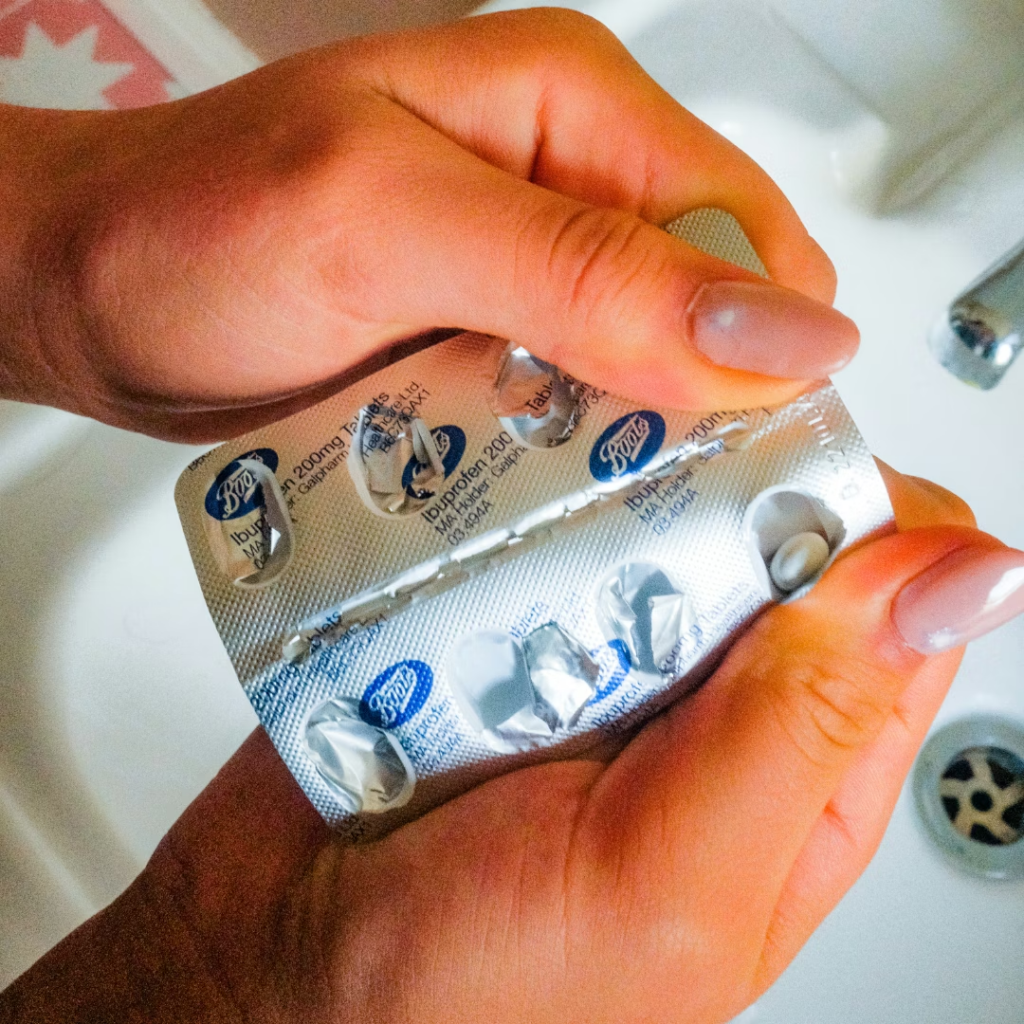
When home remedies aren’t enough, the pharmacy aisle is your best friend. In 2026, we prioritize medications that block the specific enzymes responsible for pain.
Comparison of Period Relief Medications
| Medication | Type | Typical Dosage | Why It Works |
| Ibuprofen (Advil) | NSAID | 400mg every 6h | Directly lowers prostaglandin production. |
| Naproxen (Aleve) | NSAID | 220mg every 8-12h | Longer-lasting; fewer pills per day. |
| Acetaminophen (Tylenol) | Pain Reliever | 650mg every 4-6h | Blocks pain signals in the brain; easier on the stomach. |
| Midol Complete | Combination | 2 caplets every 6h | Contains caffeine for fatigue and antihistamines for bloating. |
| Pamprin Max | Combination | 2 caplets every 6h | Uses aspirin (NSAID) and caffeine for an energy boost. |
The Science of the “Squeeze”
The intensity of your cramps ($C$) is directly proportional to the rate of prostaglandin release ($[P]$) within the uterine tissue. We can model the inflammatory response as follows:
$$C \approx \int_{t_0}^{t_f} k \cdot \frac{d[P]}{dt} dt$$
NSAIDs like Ibuprofen and Naproxen work by inhibiting the COX-2 enzyme, which is the primary catalyst in the synthesis of these prostaglandins. According to the American College of Obstetricians and Gynecologists (ACOG), starting these medications 1–2 days before your period begins can actually prevent the pain threshold from peaking.
The “Cramp-Free” Lifestyle: Home Remedies
In 2026, we’ve learned that lifestyle isn’t just about “wellness”—it’s a clinical tool.
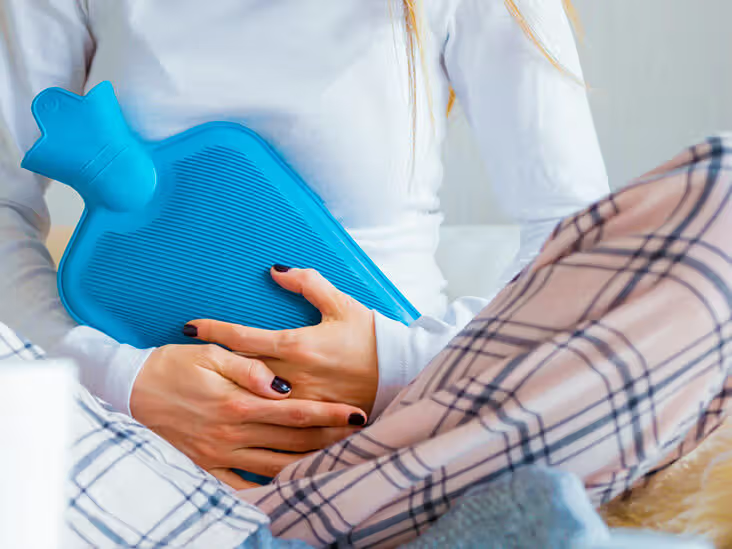
- Heat Therapy: Applying a heating pad at $40^\circ\text{C}$ ($104^\circ\text{F}$) is shown to be as effective as some painkillers by increasing blood flow and relaxing uterine muscles.
- Movement: It’s the last thing you want to do, but gentle exercise like yoga or Pilates releases endorphins—your body’s natural $OP_3$ (opioid receptor) agonists.
- Hydration & Tea: Staying hydrated reduces bloating. Specific brews like ginger or chamomile tea have been linked in clinical studies on PubMed to reduced inflammatory markers.
- The “Lasso” Diet: Limit high-salt and high-sugar processed foods, which can increase water retention and make the “squeeze” feel tighter.
When to See a Professional
Hepatologist/GYN Note: If your cramps are so severe that OTC meds don’t touch them, or if you experience pain during sex, it’s time to call a pro. Severe pain can be a marker for conditions like endometriosis or uterine fibroids.
Don’t ignore these “Red Flags”:
- Fever during your period.
- Heavy bleeding (soaking a pad in an hour).
- Pain that lasts longer than 3 days.
Consistent, high-quality rest is also a factor; check our guide on improving sleep in 2026 to see how better REM cycles can actually lower your pain sensitivity.
Conclusion
Navigating period pain in 2026 is about a multi-layered approach. Whether you choose the targeted strike of an NSAID or the soothing heat of a traditional bath, remember that your pain is valid and manageable. By getting ahead of the prostaglandin curve, you can turn a “lost weekend” into just another productive part of your month.